Most of what we call "resting" is not rest. It is the same attention, pointed at something cheaper. The distinction decides whether the next hour of work is done at full capacity or at a quiet deficit, and almost nobody notices which one they chose.
In 1995 the psychologist Stephen Kaplan formalized what he called Attention Restoration Theory. The claim: directed attention — the kind you use for coding, writing, arguing, reading something hard — is a finite resource. It depletes with use. And it is replenished only by a specific kind of activity, which he called soft fascination. A walk in a park. Clouds. Waves. A stranger's conversation overheard on a bus. The neuroscience that followed gave this a clean anatomical home. When directed attention runs, a system called the Task Positive Network is doing the work. When you actually rest, a different system — the Default Mode Network — comes online. The two are anti-correlated. One rises as the other falls. You cannot run both at once.
This changes what counts as rest. The Task Positive Network does not care whether you are writing a proposal or scrolling TikTok. Both demand externally-directed attention. Both deplete the same budget. The feeling of "I'm relaxing" while doomscrolling is a subjective illusion produced by the dopamine hits covering over the fact that the attention system is still being run, just pointed at lower-stakes inputs. One may think of it this way: if after an hour of intense coding, you scroll Instagram for thirty minutes, the system you just depleted is still depleted. You have not rested. You have paid the same rent with different currency.
Indeed, the harder the preceding work, the more punishing stimulating "rest" becomes. High cognitive load followed by high cognitive stimulation does not average out — it compounds. The Task Positive Network has been asked to work a double shift and received no break. What feels like a mild afternoon slump the next morning is, in the literature, simply attentional fatigue that the body is now carrying as a debt.
Real rest does something different. The Default Mode Network is where memory consolidation happens, where autobiographical processing happens, where the unstructured reshuffling we call "an idea arriving in the shower" happens. Shower ideas are not mystical. They are what the brain does when the Task Positive Network finally steps aside and the Default Mode Network gets the floor. Every good engineer, every writer, every founder who has watched a solution arrive during a walk has been running the same experiment without knowing it: force the Task Positive Network offline long enough for the Default Mode Network to finish the work it has been waiting to do.
One may then derive the practical rule. Wasting time well means doing something that engages soft fascination rather than directed attention. A walk in a park qualifies. A bus ride with nowhere to be qualifies. Staring out a window, cooking something you have cooked a hundred times, folding laundry, washing dishes by hand — all of these qualify. The diagnostic is not whether the activity looks productive, but whether it leaves the Task Positive Network alone long enough for the other system to come online.
Scrolling does not qualify. Neither does watching something plot-driven. Neither does texting. Neither does reading email, even email you enjoy. These activities feel like rest because they are easy, but the system they are using is the same one you just exhausted. What feels lazy is often the opposite of rest, and what feels unproductive is often where the rest actually lives.
There is a reason most people get this wrong. The activities that restore attention are almost all the activities an achievement-oriented person has been trained to feel guilty about. Walking without a destination feels inefficient. Staring at a ceiling feels lazy. Cooking slowly when you could have ordered delivery feels like waste. The guilt is miscalibrated; it evolved in a culture where leisure and stimulation had not yet been fused into a single product. Now the most stimulating things in the world are engineered to feel like leisure, and the most restful things feel like you're failing.
The consequence is worth stating plainly. People who cannot waste time well will systematically underperform people who can, across nearly any cognitively demanding domain. Not because they work less — often they work more. They work more and rest worse, which means the Task Positive Network never fully recovers, which means every subsequent hour of work is done at reduced capacity, which means the gap compounds. The person who takes an hour-long walk on Sunday afternoon without headphones is not slacking. They are performing the one maintenance operation their brain cannot perform while being entertained.
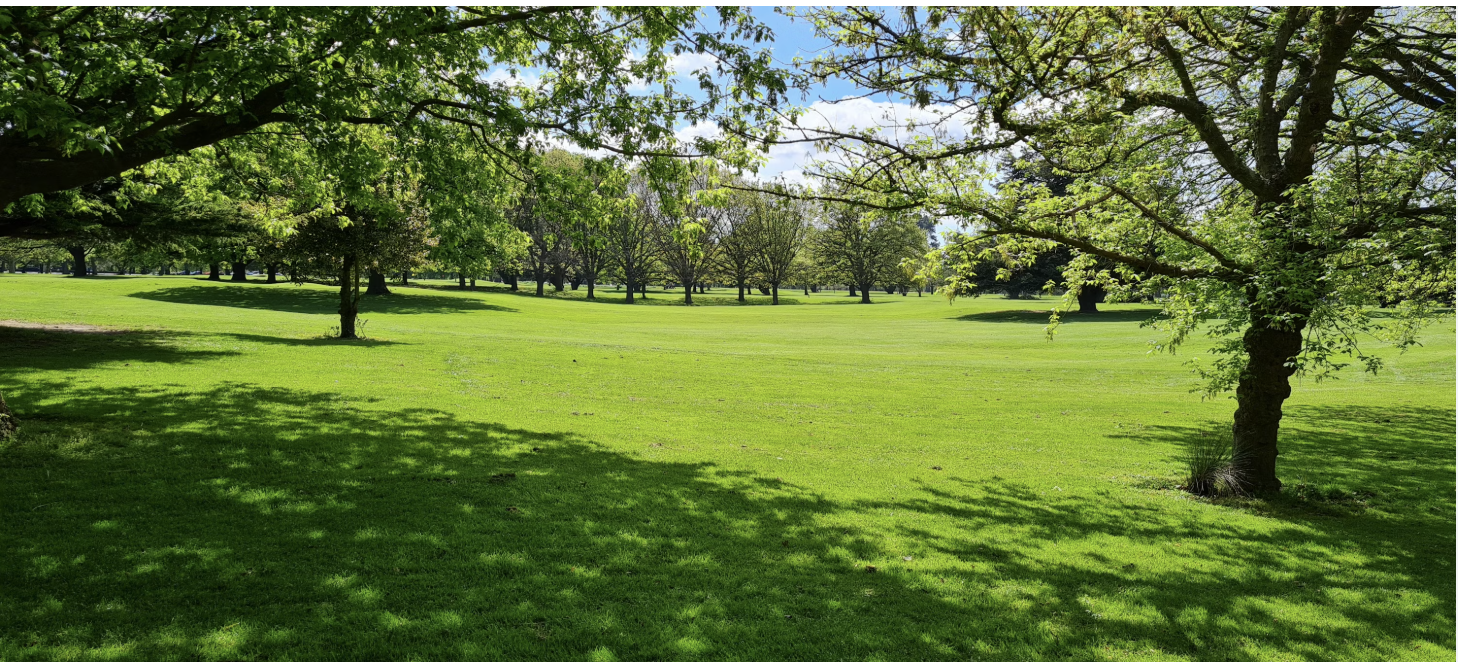
I walked through a park this afternoon, which is where this essay came from. The idea did not arrive because I was looking for it. It arrived because I stopped looking for anything. The Default Mode Network had been waiting all week.
Getting good at wasting time is, it turns out, one of the more useful skills a knowledge worker can develop — and one of the hardest, because the skill consists almost entirely of resisting the urge to do something that feels productive.
Rest the system you used. Not the one that happens to be free.